Tips and Tricks

Tips and Tricks is the most popular category that covers our thoughts on roofing materials, seasonal maintenance and more. Follow this information to get the most out of your roof!

Roof Replacement vs ACV Policies
Tips and Tricks

Roof Replacement vs ACV Policies

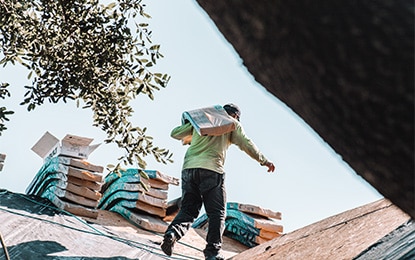
A roof is by far any building’s best defense against all the weather that nature can throw at it. However, over time a roof will start to take damage from inclement weather. Many people wonder how their insurance policy will cover that damage to their roofing. Most insurance policies have one of two types of coverage for roofing. Your roof’s value can be its current condition or its full replacement cost. Roof replacement vs ACV policies, but which one is better? And what are their differences? It’s important to understand your coverage to have a better understanding of how your policy protects your home. Types of Roofing Insurance Policies Homeowner’s insurance should cover your roof, but the type of coverage can vary greatly. In fact, there may be situations in which your roof isn’t covered at all. For example, if your roof is far too old or if it’s in incredibly poor condition then your insurance company may exclude coverage for roof damage. If you’re unsure what your policy covers then you should call your agent for more information. Actual Cash Value (ACV) Actual cash value coverage means that your insurance company will pay you for the value of your roof in its current state. In simpler terms, the depreciation of your roof is a major factor in your settlement’s payout. A claims adjuster will come and inspect the roof to determine its value and its remaining life. They’ll then determine the depreciation and use all of that information to determine your actual cash value. ACV insurance is typically cheaper than other policies and is generally for older roofs or roofing in poor condition. In most cases, you can choose if you want an ACV policy or something else. However, sometimes the age of your roof may be so great that you aren’t given the option by your insurer. Replacement Cost Coverage Replacement cost coverage means that your insurance will completely pay to replace your roof with a similar roof. The claims adjuster will research what roofing is similar to yours in material and base the settlement on the research they do. The settlement should entirely cover the cost of replacing your roof. That means that the only thing you’d have to pay for out of pocket would be the deductible. However, replacement cost coverage is typically more expensive than ACV coverage. In addition, most insurance providers will turn a replacement cost policy into an ACV policy after the roof gets to a certain age. For most policies, it’s when the roof becomes 15 years old. Call a Professional Roof replacement vs ACV policies, which is right for you? It mainly depends on how much you’re willing to spend on your roofing insurance, plus the age and condition of your roof. If you’re interested in installing a new roof or need help repairing your roof then Contact Honey Bees Roofing & Solar online or give us a call today at 817-668-6131! We offer free roofing inspections so we can help you choose the best roofing option for your home. We are one of the leading solar installers for the Burleson, Fort Worth, area and can help you take steps to have one of the most energy-efficient options possible. If you want to have a lower energy bill, keep your home cooler, or help the environment with energy-efficient roofing options then don’t hesitate to contact us!
The Different Types of Tornados
Tips and Tricks

The Different Types of Tornados

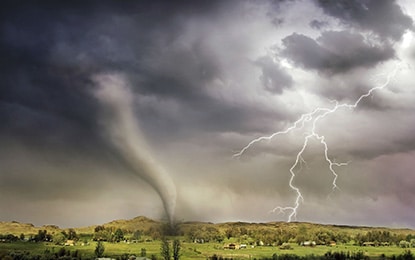
Tornados are extreme weather phenomena that happen all across the world. They happen the most in the US, with around 1,200 touching down every year. Tornados are dangerous and typically leave a path of destruction in their wake. However, it might surprise some to find out that there are actually different types of tornados. Tornados are split up into two categories, supercell tornados and non-supercell tornados. Supercell Tornados Supercell tornados are the most common, and unfortunately the most dangerous. They form from supercell thunderstorms. The thunderstorms pull low-pressure air high up into the clouds, leaving cooler hi-pressure towards the ground. Then, the air pressure tries to equalize resulting in a horizontal tube of rotating air. Once an updraft lifts the horizontal tube to stand on its side, the tornado truly starts to form. The circling air starts pulling down condensation from the skies, and once it reaches the ground it’s a full tornado. Non-Supercell Tornados Some tornados don’t start with thunderstorms. When there are low-pressure and high-pressure areas near the ground, they can start to circle each other. The rotating air doesn’t do much until an updraft pushes it up into the clouds. Once the circling wind connects to the clouds, it’s officially a tornado. Land spouts and water spouts are both non-supercell tornados. How are Tornados Rated? To measure the strength of tornados, experts examine the damage the cyclone has caused. From that, they can determine the approximate wind speeds of the storm. Those numbers are then put onto the “Enhanced Fujita Scale“, which goes from 0 to 5. In 2007, the National Weather Service put together the EF-Scale, creating a more consistent and accurate scale than the original Fujita Scale. The EF-Scale uses 28 different indicators of damage, including tree and building type. Summary – The Different Types of Tornados and How They’re Rated The two types of tornados are supercell tornados and non-supercell tornados. The main difference is whether the tornado forms from a supercell thunderstorm or not. Supercell tornados are typically more dangerous, and unfortunately typically the most common. All tornados are rated on the Enhanced Fujita Scale, which experts use to determine approximate wind speed through the damages a cyclone leaves behind. That means tornado ratings are based on how destructive the storms are. Call a Professional At Honey Bees Roofing & Solar, extreme weather fascinates us since we repair storm damage frequently. All storms can do serious damage to your home. Repairing a home after a storm is often a very lengthy and trying process. This process can be quite stressful, but Honey Bees Roofing & Solar is here to help. We’ll meet with you and your insurance adjuster on-site to discuss the restoration plan for your home. We’ll help you navigate the homeowner’s insurance claims process. We specialize in ensuring you receive everything you’re entitled to under your insurance policy. If you need help with roof repairs or understanding the roofing insurance process, Contact Honey Bees Roofing & Solar online or give us a call today at 817-668-6131! We would be more than happy to help!

Saving Money With Solar Power
Solar, Tips and Tricks

Saving Money With Solar Power

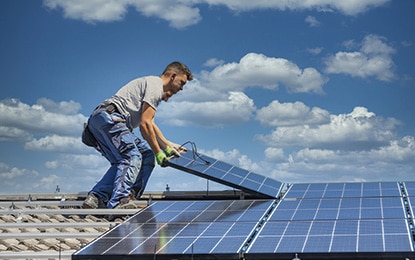
Solar power is an exciting industry. Installing solar panels may seem like an expensive risk, but it’s far more rewarding than most people know. Not only will you lower your carbon footprint, but you’ll also be saving money with solar! Lowering your energy bill by creating your own electricity as well as the plethora of tax breaks makes saving money with solar easy. Honey Bees Roofing & Solar wants to make sure you have all the info you need to make an educated decision on solar energy in your home. What is Solar Power? Solar power uses photovoltaic cells in large panels. These panels are typically on the roof of a home or building. Photovoltaic cells knock electrons free from atoms, using photons from the sun. Knocking around these electrons creates a stream of electricity. The size of a solar panel is classified by its ideal electrical output in watts. However, a solar panel’s wattage is usually between 15-30% of its ideal output. The ideal output is a solar panel’s “capacity factor.” Lowering Power Costs One of the greatest benefits of getting solar power for your home is lowering your electric bill. Texas power bills are about 20% higher than the national average. Also, power bills in Texas are at a slow rise of about 5% a year. So, lowering that bill is a major priority. You would be creating a portion of your own energy with solar panels. That energy makes you less reliant on your utility company and lowers your bill.  Solar panels can save Texans up to $18,142 over twenty years. Utility companies can charge more money during the day than at night, and even more during summer. By making your own energy with solar panels, you’re stopping the utility company from charging you at a variable rate. Making more energy than your home needs can also benefit you because of the TXU Energy Renewable Buyback, allowing you to gain bill credits from that excess energy. Tax Breaks for Solar Saving with solar includes tax breaks for using clean energy. When you reduce your carbon footprint, you are rewarded around tax time In Texas, there’s an investment credit known as the Federal Solar Investment Tax Credit. Texans also can benefit from a property tax exemption. That way, when your property increases value because of the solar panels you aren’t charged. Most utility companies also offer rebates to customers with solar panels, giving even more money back. American Electric Power (AEP) Texas, Austin Energy, CPS Energy, or Oncor residential customers can be eligible to benefit from these rebates. If you are eligible, you can receive a cash incentive between $2,500 and $8,500. Eligibility varies, so make sure to check with your utility company. Solar panels will easily save you tons of money in the long run. Lower your electricity bill and prevent utility companies from charging you extra during peak hours. Also, get extra money from tax breaks and rebates. If you’re interested in saving money with solar panels on your roof, Contact Honey Bees Roofing & Solar online or give us a call today at 817-668-6131 to schedule a free roof inspection!

Honey Bees Roofing

525 E Bethesda Rd.
Burleson, TX 76028
Phone 817-668-6131

Support

Important Links

FAQ

Contacts

Contacts

(732) 262-3141
380 Birch Bark Dr
Brick, New Jersey(NJ), 08723


525 E Bethesda Rd.
Burleson, TX 76028
Phone 817-668-6131

Scroll to Top